Get stuffed…

Mini aubergines

One of the most joyful things about being a cook is that the smallest discoveries delight you. A special find can make your day. And these days that’s just as well, with our glorious Mother of Parliaments looking like crack whore, spewing out less than Honourable Members hell bent on venally redefining shamelessness in a way that makes Katie Price look like a particularly devout Amish sister.

As I walked past the little Indian green grocers on our high street, I was thrilled to see a crate of gorgeous, fat baby aubergines. So pretty and tempting, I couldn’t resist picking up a few handfuls, along with a bundle of perky curry leaves. When I went inside to pay, the gently smiling woman at the till explained to me how she stuffed them and baked them and it sounded delicious. Just the thing for dinner.

To be honest, our sharing of this recipe was largely done in the international language of mime and point. And I was delayed in writing it down as my short trip home became rather protracted due to it taking me 30 minutes to pay a cheque into the bank. (HSBC Stoke Newington High Street – one working teller and a seemingly permanently broken paying-in machine at 3.15pm, are you sure? No, I don’t want to buy travel insurance in Turkish, investigate an ISA, arrange to purchase a house within the framework of Shariah law, stock up on travellers’ cheques – I just want to GIVE. YOU. MY. MONEY. PLEASE. I’ve stood in shorter, more cheerful queues when I lived in Soviet Russia.)

So I hope I remembered it accurately. I probably didn’t, but it was good. And – note to Members of Parliament everywhere – I paid for it all myself. You should try it sometime.

Stuffed aubergines

Stuffed aubergines

Gosh, I sound a bit cross today. I’m probably just hungry…

I didn’t have any chillies – an uncharacteristic oversight on my part – and they would have been good in this dish. But given my present state of mind, I probably don’t need the extra heat.

Serves 4 as a main course

3 tbsps groundnut oil
A dozen or so small aubergines
1 tsp mustard seeds
2 onions, halved and finely sliced
2-3 curry leaves
1 tsp ground cumin
1 tsp ground coriander
1 mild, green chilli, deseeded and chopped (optional, depending on your state of mind)
A small ‘thumb’ of ginger, peeled and finely grated or minced
3-4 fat cloves of garlic, peeled and finely grated or minced
About a small teacupful of desiccated, unsweetened coconut
3-4 large, juicy tomatoes, grated (see TIP)
A small handful of coriander leaves, roughly chopped, plus a few more for garnishing
Salt

Ingredients

Spices Cumin, cardamom and mustard seeds

Poppadoms Poppadommmmmmmm

Preheat the oven to 200C/400F/Gas mark 6.

Cut the aubergines from their bases to their tips and cut them again crossways, being careful not to cut all the way through the skin – you want a cross-shaped cut which allows you to open them up a bit. Warm 2tbsps of the oil over a medium heat in a large saucepan and sauté the aubergines for five minutes or so until they soften and browned a little. Put to one side to cool while you prepare the stuffing.

Add the remaining tablespoon of oil to the pan and fry the mustard seeds for a minute or so until they start to pop. Add the onions and sauté them until they soften and turn a rich, golden brown. (Unlike most European dishes, where we cook onions until they’re soft, sweet and translucent, lots of the flavour in Indian dishes comes from caramelising the onions.) Stir in the curry leaves, cumin, ground coriander, chilli (if you’re not as cross as me and you can take the heat), ginger and garlic and a good pinch of salt. Stir and cook for a few minutes until all of the onions are well coated. Add the coconut and tomatoes and stir until thickened a bit, then stir in the chopped coriander. Taste, and add a bit more salt if it needs it. Stuff each of the aubergines with a couple of spoonfuls of the filling and line them up in an ovenproof dish. Cover tightly with foil or a lid and bake for 50-60 minutes. We ate ours with basmati rice, minty raita and black pepper poppadoms. I feel more cheerful just typing that.

10, 9, 8, 7......My little flotilla of aubergines, about to be launched into the oven


TIP
Look, I spend very few unhappy moments in the kitchen, but almost all of them have involved skinning tomatoes. Chopping onions? Mincing chillies? Gutting fish? No problem. Pile ‘em up. But tomatoes. All that cutting of crosses, boiling of water and preparing of ice baths seems a bit too like some kind of arcane pagan ritual to me. I mean, I just want to eat them, not sacrifice them on the altar of gastronomy. These days, I mostly grate them unless I’m doing something very refined. Just press a ripe tomato against the coarse side of a box grater and grate away – you get all of the pulpy flesh and, as you press, the skin is left at the end all ready for you to discard. And what’s a few seeds between friends, particularly on a week night?

Another day, another David…

01 - The finished tart

Do you remember I told you Lady de B and I joked about setting up a catering business out of the back of a vintage Bentley? Well, we don’t have the wheels yet but we do have our first gig. My friend Paula asked me to cater her wedding in September – marquee in her country garden, bunches of blowsy, old-fashioned roses and herbs on the tables, mismatched plates and a hog roast for 120 happy revellers. Richard Curtis, call your production designer…..

Paula wants canapés, big salads to go with the roast, puddings and gorgeous English cheeses, and later, little bits of biscuity heaven to go with tea and coffee. I’m excited. Excited and scared. I’ve never done anything this huge before. So I called Vanessa, AKA Lady de B, who as well as being a wonderful cook, is queen of the clipboard and list. Between us, we’re going to do it. Last night we had our first planning meeting at De Beauvoir Mansions and I made a French Onion Tart to take along for our supper. It’s based on Elizabeth David’s Tarte à l’Oignon or Zewelwaï, the lovely tart from Alsace, from her book French Provincial Cooking.

I thought of calling this post ‘I have cried salty tears…’. I know this is a lot of onions, but it’s worth it – they all cook down into the most deliciously sweet, lusciously melting, creamy mass. You’re eating essence of onion, and that’s never a bad thing.

Tarte à l’Oignon, or Zewelwaï

My lovely dad, who is stoical and uncomplaining in the face of all kinds of adversity, hates to chop an onion almost more than any other domestic task. I think of all of the things I’ve ever done, he’s most impressed by my capacity to slice and dice my way through a mountain of onions without the aid of goggles, gin or Valium.

250g plain flour
125g unsalted butter, very cold, cut into small cubes
1 tbsps olive oil (not extra virgin)
A good pinch of sea salt
2 eggs
2-3 tbsps iced water
1.2 kg onions, finely sliced
6 egg yolks, very well beaten
284ml pot of double cream
A few gratings of nutmeg
Salt and freshly ground black pepper

01 - A bowl of onions

02 - Chopped onions

Cooked Onions 1
Put the flour, butter and salt into a food processor and pulse briefly a few times – you still want little, pea-sized pieces of butter in the mix. Drop in the eggs and pulse a few more times. Turn it out into a bowl and add the water a little at a time, stirring gently with your hands or a knife to bring it together into a ball – you may not need all of the water. Place the dough on a floured surface and with the heel of your hands, lightly stretch it out into a ragged rectangle. Fold it over in three sections, rather like you would a business letter, and repeat the process a couple of times. Do it all very gently. Wrap in clingfilm and chill for at least a couple of hours so that it loses all of its stretch.

Butter a flan tin (mine was 19x29cm) and dust lightly with flour. Roll out the pastry so that it is quite thin. Line the tin with the pastry, pressing it gently into position and trying not to stretch it. Don’t trim it yet – put it into the fridge for half an hour or so to chill down, then trim it just before you fill it.

While all the pastry palaver is going on, make the filling. Melt the butter in a large frying pan with the oil over a medium-low heat. Tip in the onions with Cooked Onions 2a good pinch of salt and stir until they’re all coated. Turn the temperature down to low and cook the onions until they are soft, translucent and starting to turn golden. Stir them from time to time to make sure they’re not sticking. This took about an hour, on the lowest possible heat. Season well with salt, nutmeg and plenty of pepper and allow to cool down a bit. In a jug or bowl, whisk together the cream and well-beaten eggs then pour over the onions and stir until everything is combined.

Preheat the oven to 200C/400F/Gas mark 6.

Pour the filling into the pastry case (yes, that’s right, no blind baking – hurrah!) and put the tin on a baking sheet. Bake for about 30-35 minutes until golden. Eat hot. You can certainly eat it cold – I had leftovers for breakfast this morning and it was delicious – but the pastry will lose some of its melting flakiness.

06 - Ready to eat

TIP

If you want to serve this when you have friends round for lunch or dinner and you’d like to avoid last-minute panics, line the flan tin and make the filling a few hours ahead. Pop everything in the fridge until about 45 minutes before you want to serve it, then assemble and bake at the last minute.

Slices of heaven

Cake

After three hold-your-breath busy days, I was thrilled to spend this morning with one of my favourite people, my godson Luca who is four, no, sorry not four, ‘Nearly FIVE, Auntie Debora’. He’d spent yesterday with his godfather and had a lovely time at ‘Pizza Express, where there’s a POOL on the ROOF!’ Now I know for a fact that they had lunch at Shoreditch House, the chi-chi-la-la members’ club down the road where annual membership costs the equivalent of 70 Pizza Express pizzas.

Luca loves to be in the kitchen. Since he was old enough to sit on one of our high stools, he has done a hero’s job of washing up at our sink. A heap of plastic picnic cups and plates bobbing in the suds would absorb him for long enough for his mum and me to have a cup of tea and catch up.

Baking Cupboard These days, we’re a long way from Fairy Liquid and soggy sleeves. Luca has a patissière’s eye for detail and insists on tasting and testing at every stage, particularly when there’s chocolate involved. There’s always chocolate involved. My baking cupboard is Luca’s Garden of Earthly Delights, with its tubs of sprinkles, crystallised flowers and bags of rainbow sugar. Each container has to be examined and pondered over, before we cut it down to a shortlist of three or four which will make it onto the final cake. Today, our chocolate cake was resplendent with vermicelli, a few yellow sugar roses, a sprinkling of purple sugar and a twinkle of silver balls. We’re nothing if not exuberant.

Luca mixes and Barney watches Luca mixes it up
We also made pizza, proper pizza with a real, thin crust (Richard, I promise I’m not entering into a wicked game of Godparents: The Rivals). Just as we’d debated over sprinkles and sugar roses, so we discussed our toppings in enormous detail. Arrabiata sauce, olives (well, Luca’s Daddy is Portuguese) some dollops of fromage frais and a grating of Parmesan, then some basil leaves and a drizzle of basil oil when they came out of the oven. I have to say, they were a little pizza perfection and when I suggested saving a slice for Mummy, Luca was most emphatic. ‘I am going to eat it ALL. I’m nearly FIVE.’

Great pizza crust

The pizzas

This is a simplified, slightly adapted version of my friend Daniel Stevens’ recipe for pizza from his book River Cottage Handbook No.3 Bread. If you are at all interested in baking bread – and certainly if you think you’d ever like to build a brick oven in your back garden – I’d highly recommend it. He’s a baker from his flour-dusted shoes to his elegant, dough encrusted fingertips. You couldn’t be in safer hands.

Makes 4 large pizzas

Slice of pizza 
250g plain flour
250g strong bread flour
5g powdered yeast
10g salt
325ml warm water
About 1tbsp olive oil

A small handful of semolina or polenta for dusting the baking sheets

In a mixer with a dough hook attachment, mix together the flours, yeast, salt and water on a slow speed then stir in the olive oil. Mix for about 10 minutes until smooth and silky (you can certainly do this by hand, it will just take longer). Put your dough into a warm, lightly oiled bowl, cover with a plastic bag and leave to rise until doubled in size. Luca and I recommend Finding Nemo while waiting for the dough to prove.

Whack your oven up as high as it will go and let it come to temperature before you tip the risen dough out onto a lightly floured surface and divide into four. Mould each quarter into rounds with your hands then roll them out as thinly as you can and place them on your semolina-dusted baking sheets. Add your toppings – as Coco Chanel famously said, ‘Elegance is refusal’, so add them thoughtfully and sparingly. An overloaded pizza is not a good thing (the same principal does not apply to chocolate cake, just so you know). Put them in the oven and bake for about 7 minutes, until golden and bubbling. Eat quickly, in thin slices, with your hands. I could never trust a person who eats a pizza with a knife and fork.

End of pizza days

Luca’s baby brother Leo arrives to help, and looks very fetching in a mixing bowl.

Leo

Old friends and new discoveries

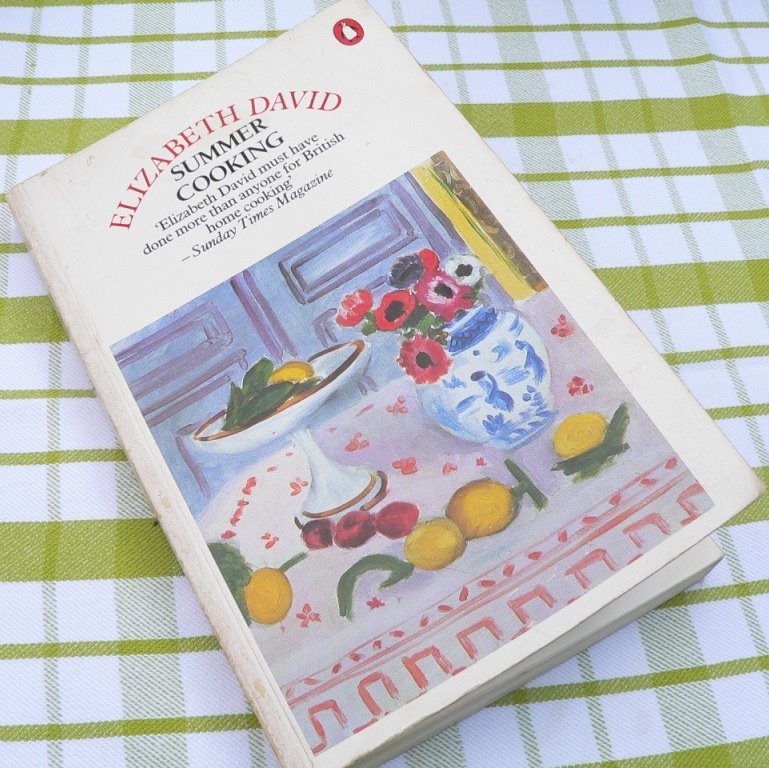
Click to EnlargeWhat’s the definition of an optimist? Someone who digs out her copy of Elizabeth David’s Summer Cooking as soon as the thermometer flirts with anything over 15°C. This weekend, I leafed through my old copy, with its stained pages and broken spine, my name written territorially on the title page. I bought it the summer I graduated, when the world was opening up before me, full of delicious possibilities.

Click to Enlarge
That summer, I shared a first floor flat in a large Edwardian terraced house with three boys. Every second Saturday, I trotted down the stairs to the flat below to give our rent to the elderly son-in-law of the entirely ancient lady who owned the building. He looked exactly like Freud. He even spoke with a refined though pronounced Austrian accent. This would not have been quite so disconcerting had the room in which the transaction took place not resembled so closely the study in the Freud Museum just up the road, complete with antique rugs, heavy wooden furniture and strange little bibelots of mysterious origin and sexuality. I was never quite sure if I should hand over the cash right away or lie down on the sofa and tell him a bit about my childhood first.

Our kitchen was so tiny and prone to condensation that, summer and winter, we had to push open the large sash window every time we wanted to do anything more extravagant that make tea. Still, we managed to throw some great parties, tossing the key down on a string from that same window to our visitors below to save ourselves the trouble of the many stairs. One hot August night, I lay in bed listening to the sounds drifting up through my window from neighbouring houses. Soft laughter, the clack clack clack of a type writer and Miles Davis’ Sketches of Spain being played over and over again – fresh from a tiny Scottish university, I thought I was living in the height of bohemian splendour.

Since then, this tatty book has travelled with me from a Moscow tower block to summer rentals in the Languedoc, as well as across several London postcodes. It’s been packed away and then hastily unpacked in increasingly large and better-ventilated kitchens. We’re friends. We have history. We can not talk for months, years even, but when we get back together it’s as though we’ve never been apart, fish kebabs, crab soup, omelette aux fines herbes and apricot ice cream, our lingua franca.

So I was surprised to discover a recipe I hadn’t noticed before, one for Maqlub, the Persian aubergine and rice dish more frequently called maqluba or makloubeh. Its name means ‘upside down’ and truthfully, that’s the only tricky part of making this fragrant and lovely dish – inverting the hot casserole requires a cool head and sturdy oven gloves.

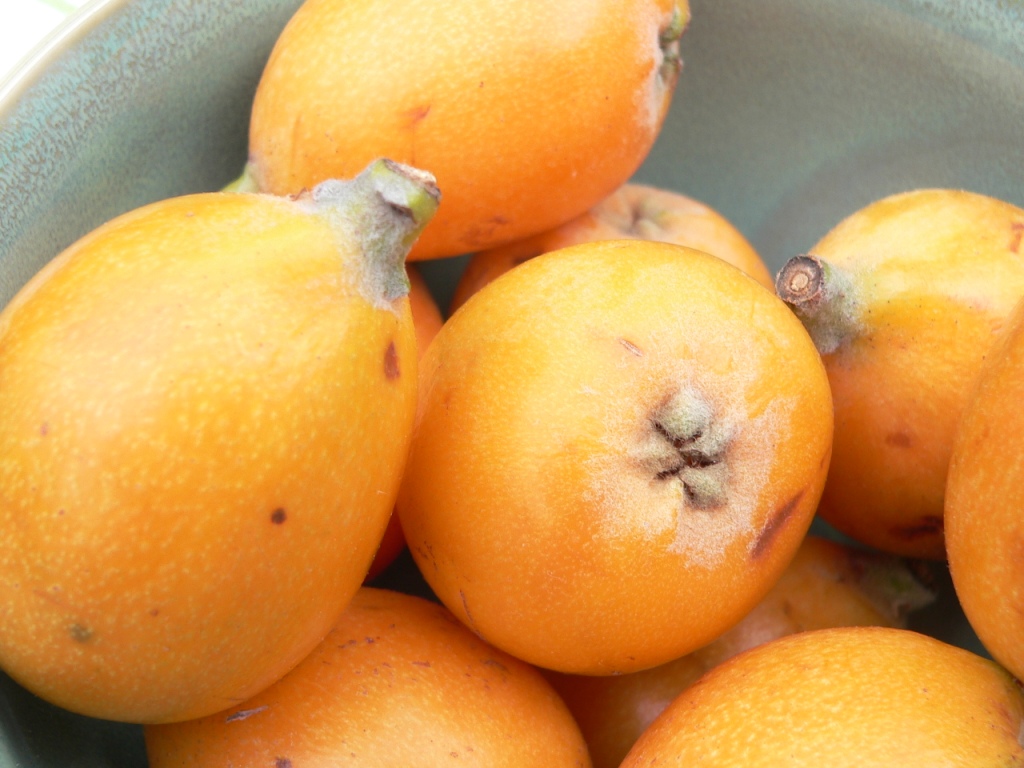
Click to EnlargeI went to the Turkish Food Centre on Ridley Road to buy my ingredients. I love it there, tucked away behind the market. It’s like being on holiday (without the sadistically small baggage allowance), with aisle upon aisle of intriguing ingredients and some of the cheapest, freshest produce in London. I always end up buying more than I’d planned. I may go in for a jar of tahini, but I’ll come out with rose petal jam, some marinated olives, a packet of sumac, honeycomb, a pot of lebneh, a loaf of pillowy, still-warm flat bread, huge bunches of herbs… Yesterday, I was quite restrained, restricting myself to things for the maqlub, some fresh green almonds and a few loquats to nibble for breakfast. I was very proud that I managed to swerve the vine leaf press, a slab of earthenware with holes in it I imagine intended to keep dolma from unfurling while they’re cooking. But I’ve been thinking about it all afternoon.

Click to Enlarge

Maqlub

Elizabeth David wrote: ‘Although this is rather a trouble to make it is one of the best of all aubergine dishes, and the rice, which has absorbed some of the flavour of the meat, is particularly good. A good bowl of yoghourt can be served with it, and a tomato or green salad.’

Click to Enlarge
I’m giving you this recipe as Elizabeth David wrote it, apart from converting it to metric and making some small details of technique more explicit. When I make it again, I might make a few very small adjustments based upon what I’ve read about maqlub since I made it. I might try making the first layer out of sliced tomatoes and I’d definitely brown the mince in the pan once I’ve finishing frying the onions. Elizabeth David suggests you can use raw or cooked meat and I used raw, which clumped up a bit in the cooking process. I think cooked lamb would combine more seductively with the whole dish. I might add a little more seasoning, a pinch or two of cinnamon and nutmeg and a few grinds of black pepper to the meat, and I might toss a few toasted almonds over the top with the parsley.

4 medium-sized aubergines
600g minced lamb or mutton, cooked or raw
200g of rice, I used basmati but any long-grain rice will do
1 onion, finely sliced
2 cloves of garlic, finely chopped
50g flaked almonds
½ tsp ground allspice
400ml beef stock
1tsp of finely chopped thyme leaves or marjoram

Olive oil for frying – not extra virgin
Parsley, finely chopped, for garnishing

Cut the unpeeled aubergines into 6mm slices, sprinkle them with salt and leave them for an hour. Put the rice into soak in water for an hour. Mix the allspice, thyme or marjoram and garlic with the meat. Rinse and dry the aubergines. Heat about 1cm of oil over a medium-high heat and fry the aubergines on both sides until just starting to turn golden. When you have finished frying the aubergines, fry the onions until soft and translucent.

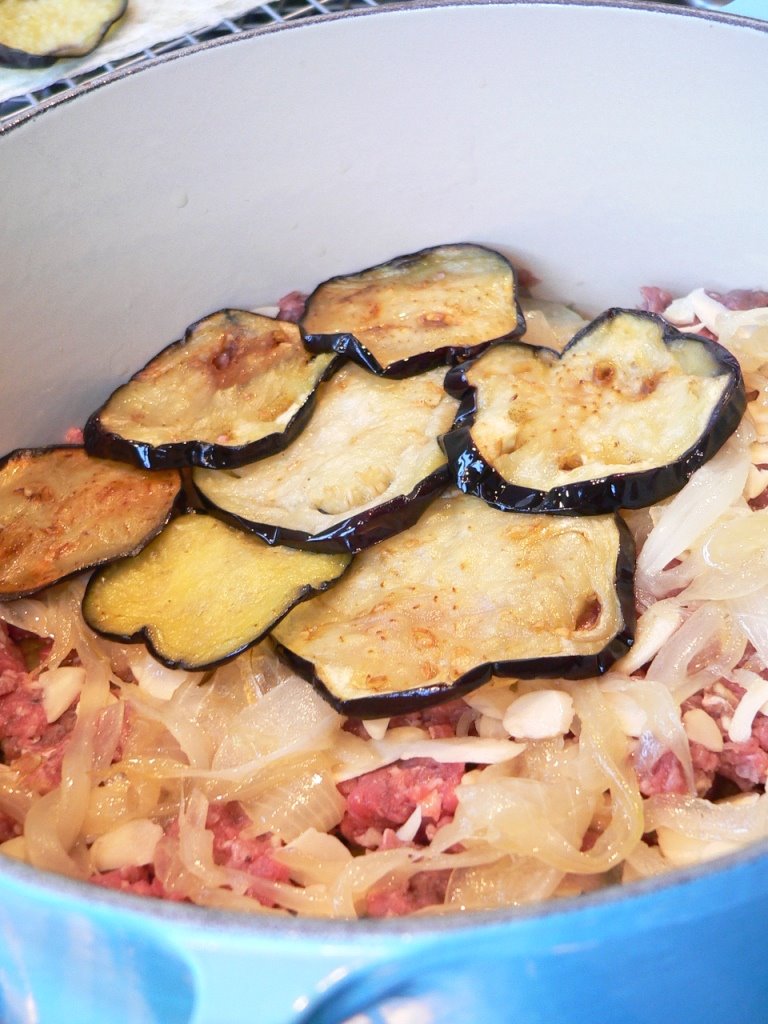
Brush a round casserole lightly with oil. Put a layer of the fried aubergines into the bottom of the casserole (I used a third, so I would end up with three layers), sprinkle on a layer of meat. Click to EnlargeSprinkle with a few blanched almonds and a third of the onions. Repeat until all of the aubergines and meat are used up, and on top put the drained rice. Pour over half of the stock, cover the dish and cook over a low heat for about 20 minutes. Add the rest of the stock and cook for another 30-40 minutes until the rice is almost cooked. Preheat the oven to 180ºC/350ºF/Gas mark 4.

Put an ovenproof serving dish or plate over the pan, carefully turn out the contents of the casserole and put into the oven for another 10-15 minutes. The rice will finish cooking and any liquid left will be absorbed.

We ate it with a few peeled, deseeded and sliced cucumbers tossed in yoghurt with a pinch of sea salt and chopped mint. I trickled a little good olive oil over it just before serving.

Click to Enlarge

TIP
Aubergines. Do you salt them or not? In the past, they were always salted to remove any bitterness and some of their moisture, but with modern varieties it’s not really necessary. I only salt them when I’m going to fry them, as in this recipe, so they don’t soak up quite so much oil – though, be warned, they do still soak it up as keenly as a drunk in a bar five minutes before closing.

LICKED

Click to Enlarge
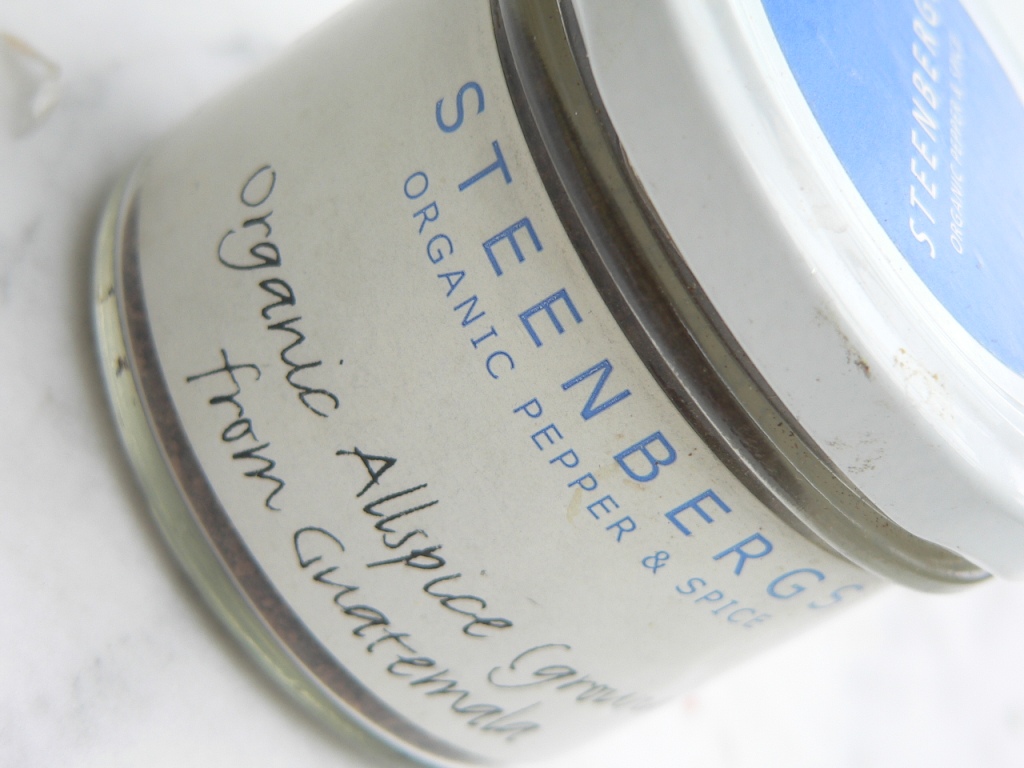
I love Steenberg’s spices, a fantastically extensive range of organic, often Fairtrade seasonings sourced and sold by Axel and Sophie Steenberg in North Yorkshire. They now stock chocolate, vanilla, tea and coffee too.

Click to Enlarge
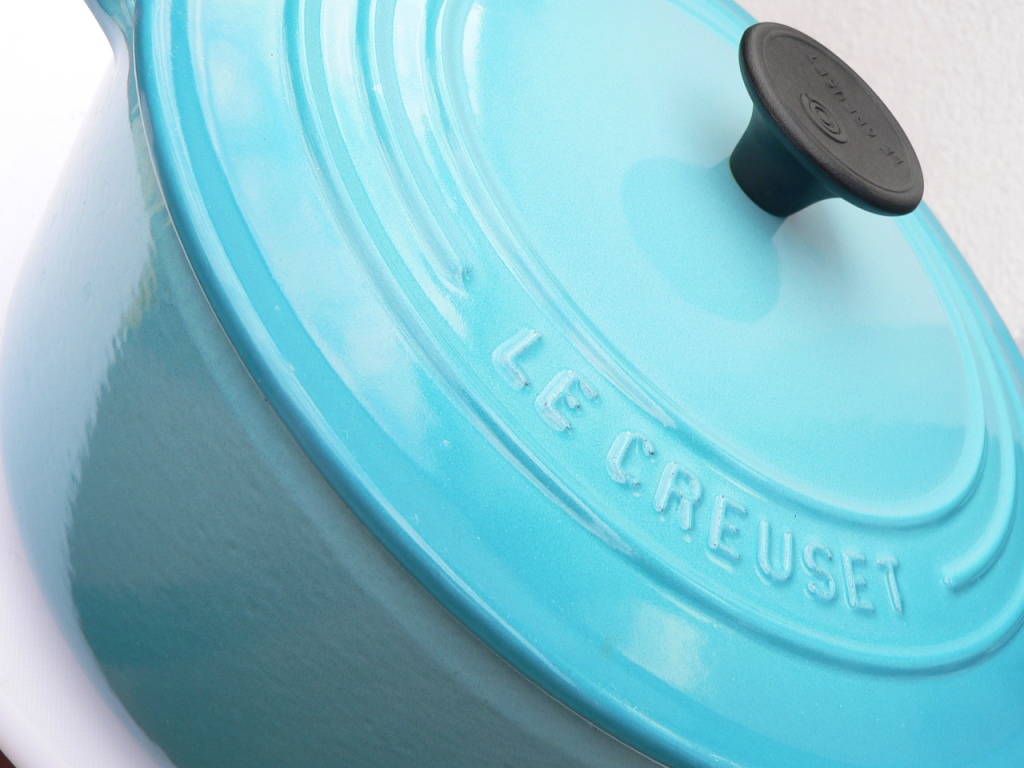
I was not an original bride. I did my best to convince Sean that our marriage licence would not be valid without being able to show proof of ownership of at least three Le Creuset casseroles. Nearly 12 years later they’re still going strong. Despite being shamefully overworked and sometimes being the object of much incendiary abuse, they’re still perfect – the same might be said for Sean.

Lady de B

I’d like to introduce you to Lady de Beauvoir. That’s not her real name – though Vanessa’s elevation to the peerage for services to the general jollity of the masses must surely be imminent? In the meantime, we all call her that because it’s the name of the part of London where she lives and because, while all around her are track suits and tower blocks, she negotiates those mean streets with velvet ballet slippers on her feet and a French market basket swinging from her arm. Her house sparkles with antique chandeliers and lovingly waxed floorboards.

At one point, Vanessa and I considered setting up our own business. We both spend an inordinate amount of time advising our many gay friends about the decoration and furnishing of their homes, obsessing over every detail, whether it’s what they should put on their perfect Matthew Hilton dining table or pour into their Jasper Conran wine glasses. We thought we could offer a one-stop queenly lifestyle advice service, everything from decorating and gardening to food, wine and flowers – the concept of GayCare was born. This wasn’t our only business idea – but given that our other flash of entrepreneurial brilliance was running a catering company out of the back of a vintage Bentley, we’re hardly beating a path to the Dragons’ Den.

Vanessa can throw a party for anything – a new job or new season’s asparagus, a good haircut or a surfeit of raspberries. So the sun coming out is definitely cause for celebration.

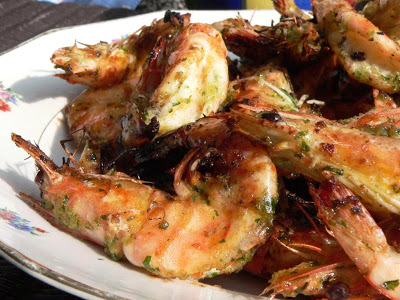
Yesterday, Vanessa held the inaugural barbecue of the season. Five of us sat amid pots of brightly coloured primulas and anemones on her pretty terrace, sipping the year’s first glasses of rosé and feasting on lamb chops, smoky baba ganoush and a mouth watering salad of crunchy cucumbers, hot, hot, hot red chillies and soothing dollops of mascarpone and crème fraîche. All definitely delicious, but by far the most spectacular dish of the day was a mountain of grilled prawns in a perky marinade. Lady de B says she based it on a Marcella Hazan recipe. She’s a braver woman than I to tinker with a recipe from that marvellous, and marvellously dictatorial, Italian food writer, but the results were addictively, messily wonderful.

Hard-core prawn

3-4 tbsps extra-virgin olive oil
3-4 tbsps vegetable oil
80g fine, dry breadcrumbs
1 small clove of garlic, finely chopped
3-4 tbsps finely chopped flat-leaf parsley
A good few pinches of sea salt
Plenty of freshly ground black pepper
1kg large prawns, unshelled but cut along the spine and the dark vein of intestines removed

Whisk together all of the marinade ingredients in a large bowl then add the prawns, mixing everything well with your hands and making sure you rub plenty of the tasty sauce into the cut part of the prawns. Marinate for about an hour in a cool place, ideally not the fridge.

Heat the barbecue until the coals glow red and are covered by a coating of white ash. Place the prawns on the grill in batches (use tongs – but you knew that, right?), turning after a couple of minutes and cooking until the prawns have taken on some colour and are just opaque in the middle. Don’t overcook – an overcooked prawn is a horrible thing, unless fish-flavoured chewing gum is something you crave. Make sure you have a mountain of napkins – they don’t have to be pretty little patches of Provençal linen like Lady de B’s, for the rest of us mere mortals, paper ones will do.