Category: Baking
Cookbook and Cake Sale
My first cake for Free Cakes for Kids Hackney
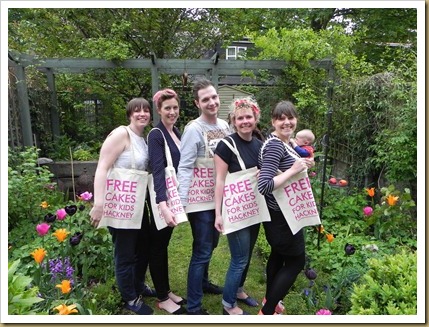
Recently I signed up as a volunteer for Free Cakes for Kids Hackney. Essentially, FCKH matches up keen bakers like me with families who find it difficult to provide birthday cakes for their children. I get to bake, which I love, and a kid gets to blow out some candles. Simple.
When FCKH were trying to think of a way to celebrate the making of their hundredth birthday cake, I had an idea. My dining room table was creaking under the weight of more than a hundred cookbooks I’d been sent as a judge for the Guild of Food Writers’ Cookbook of the Year award. Why not have a cookbook and cake sale to raise some funds so we can make more cakes for more kids?
Some books for the sale.
So if you’re free this Sunday, May 19, do come. There’ll be many of the biggest titles from 2012, so you can tuck into brand new copies of Ottolenghi, Nigella, Jamie, Hugh and Mary Berry at knock down prices – and there’ll be quite a few second-hand books too. And if that isn’t a big enough draw, we’ll be serving tea and cake, of course.
There are Free Cakes for Kids groups springing up all over the country. If you’d like to volunteer or donate, check out their website here.
COOKBOOK AND CAKE SALE
19 May, 2-5pm, 112 Rectory Road, Stoke Newington, London N16 7SD
Cash only, please.
What’s the fastest cake in the world?
Cheddar cheese scones, cucumber sandwiches and dark mocha cake.
When he was a little boy, my nephew Angus’s favourite joke was ‘What’s the fastest cake in the world?’. Answer: ‘Sssccccone!’, delivered with tousled head moving rapidly left to right. His second favourite joke was ‘What’s the second fastest cake in the world?’ Answer: ‘Merrrrrringue!’, delivered in the manner of a car racing around a tough corner at Brand’s Hatch. He’s now in his second year at Sheffield University and his jokes haven’t got any better. At least not the ones he tells me.
On Friday, I invited my friends Jane and Lola to tea. A batch of scones was certainly in order, along with cucumber sandwiches and cake. A plain scone with raspberry jam and clotted cream is a fine thing indeed, but as the cake was a dense chocolate number with a rich, coffee buttercream icing I thought a savoury scone might be better. They certainly vanished very quickly, quicker, in fact, than you could say ‘Sssccccone!’.
Cheddar Cheese Scones
This is the basic recipe but you can adapt it as you wish. Add a pinch or two of chilli flakes, or some finely chopped thyme, dill, chives or oregano if you like.
Makes 6 large scones or 10 smaller ones.
220g self-raising flour, plus a little more for dusting the cutter
1 tsp English mustard powder
Pinch of salt
60g unsalted butter, chilled and cut into small cubes, plus a little more for greasing the baking sheet
50g mature Cheddar, grated
A few grinds of black pepper
About 150-180 ml whole milk, plus a little more for brushing the scones
Preheat the oven to 220ºC/425ºF/Gas7. Lightly grease a baking sheet.
Sift together the flour, mustard and salt. Rub in the butter with your fingertips then use a knife to mix in the cheese and pepper. Make a well in the middle and use the knife to stir in enough milk to make a soft dough.
Turn out onto a lightly-floured surface and knead very gently, just enough to bring it together. Pat the dough out into a round about 2cm thick. Dip a 7cm cutter in flour (or a 5cm one if you’re making smaller scones) and cut the dough out into rounds. Transfer them to a baking sheet.
Gently knead together the leftover dough and cut out some more scones until you’ve used up all of the dough. Brush the tops lightly with milk. Bake for 13-15 minutes (10-12 minutes for smaller scones), until risen and golden. Cool slightly on a wire rack and serve warm with plenty of butter.
Baking for a Sweeter Tomorrow
This cake is my insurance policy for a sweeter tomorrow. When you have a selection of cakes covered in icing, fruit and chocolate as we did for Séan’s birthday, a humble brown cake doesn’t exactly steal the limelight. When all else is but crumbs, there’s every chance you will have a slice or two of apple cake left the next day to enjoy in blissful isolation with a cup of coffee.
Just the right amount of leftovers.
I based this cake on a recipe I found here. I adjusted it to work in a two-litre bundt tin as I don’t have a three-litre one, and added maple syrup to the glaze. I also sprinkled over some praline, as I think it’s often good to have a little sweet, nutty crunch with your cake, but you can leave it out if you like.
Spiced Apple Bundt Cake with Maple Syrup Glaze
For the optional praline:
125g shelled hazelnuts
200g caster sugar
For the cake:
200g plain flour, plus a little more for dusting the tin
1 tsp bicarbonate of soda
1 tsp ground cinnamon
½ tsp freshly-grated nutmeg
¼ tsp ground cardamom
Good pinch of ground cloves
½ tsp salt
400g apples
225g unsalted butter, softened, plus a little more for dusting the tin
250g caster sugar
80g light muscovado sugar
Finely grated zest of a lemon
2 eggs
1 tsp vanilla extract
1 tsp lemon juice
3-4 tbsp milk
For the glaze:
70g light muscovado sugar
50ml whipping cream or double cream
2 tbsp maple syrup
30g unsalted butter
1 tsp lemon juice
½ tsp vanilla extract
¼ tsp salt
If you’re using the praline, make it first. Preheat the oven to 180°C/350°F/Gas 4. Scatter the hazelnuts in a roasting tin and place them in the oven. If the hazelnuts still have their skins, roast for 7-8 minutes until the skins are just blackened. Tip them into a clean tea towel, cover and leave for a minute before rubbing vigorously to remove the skins – don’t worry too much about getting every speck off. If they’re already skinned, simply roast them for 5 minutes or until lightly toasted.
Line a baking sheet with Silpat or lightly buttered baking parchment. Warm a heavy-bottomed frying pan over a medium heat – it’s best to use one with a shiny interior rather than a dark, non-stick one as it will make it easier to see when the caramel is the right colour. Tip the sugar into the pan in a thin, even layer. When the sugar starts to melt, stir it gently to encourage it to melt evenly. When it has dissolved, stop stirring and watch it carefully. When it has turned a rich, golden amber, tip in the nuts and quickly stir with a fork before tipping out onto the prepared baking sheet. Cool completely then either chop roughly with a knife or pulse in a blender. You’ll have more than you need for this cake, but it keeps well in an airtight jar and you can use the leftovers to decorate other cakes and puddings.
Lower the oven temperature to 160°C/325°F/Gas 3. Thoroughly grease a two-litre bundt tin with butter. Scatter in some flour and cover the tin with cling film. Give everything a very good shake, remove the cling film and tap the tin to remove excess flour. This will show up any spots you’ve missed with the butter, so give them a little touch up.
Sift together the flour, bicarbonate of soda, spices and salt. I sift them twice so that everything is well combined but I’m sure this isn’t strictly necessary.
Peel and core the apples and grate them coarsely. Pat them with some kitchen paper to remove excess liquid. You should have about 225g apples.
In a stand mixer, beat together the butter and sugars until fluffy. Add the eggs one at a time, beating well after each addition. Beat in the vanilla, lemon zest and juice. Fold in the flour mixture with a metal spoon and then gently fold in the apples. Mix in enough milk to make a smooth batter. Spoon into the prepared tin and gently smooth the top with the back of a spoon. Bake for about 45-50 minutes until a toothpick comes out clean. Cool in the tin for 15 minutes then turn out onto a rack set over a plate.
While the cake is cooking, make the glaze. Stir together all of the ingredients in a small, non-stick pan over a low heat until all of the sugar has dissolved. Raise the heat slightly and whisk until the mixture comes together into a smooth, glossy sauce.
While the cake is still warm, pierce the top all over with a skewer and pour over the glaze, allowing it to soak into the cake before pouring over more. Use a spatula to scrape the glaze which has dripped from the cake onto the plate back into the pan. Warm it through and pour it over the cake. Sprinkle on some praline and cool for a further 30 minutes. Serve warm or at room temperature.
There’s Only So Much Toast
![]()
Every year I make marmalade. I love the restful, rhythmic chopping and the smell of it simmering in the pan. I love the look of a pleasing stash of gleaming, amber jars of it on the shelf. I love it on toast.
But let’s be honest, there’s a limit to how much toast a girl can eat in a year. I’m always looking for ways to include it in things as well as on things. I use marmalade to glaze hams, in a sticky glaze for chicken drumsticks, in steamed puddings and in cakes.
For Séan’s birthday, I wanted to make a marmalade cake based on this favourite Nigel Slater recipe for a loaf cake. In honour of the boy’s birthday, I gussied it up with a bit of booze, a thick layer of chocolate ganache and some sparkling, crystallised orange slices so in the end it was rather like a huge, posh Jaffa Cake. ![]()
Marmalade and Chocolate Cake![]()
For the crystallised oranges:
1 small orange, thinly sliced and ends discarded 200g caster sugar 750ml water 1-2 cardamom pods, bashed, optional
For the cake:
175g unsalted butter, softened, plus a little more for buttering the tin 100g marmalade Finely-grated zest and juice of a large orange 1 tbsp Cointreau, optional 175g caster sugar 3 eggs, lightly beaten 175g self-raising flour, sifted Pinch of salt
For the syrup: Juice of 1 large orange Juice of 1 lemon 100g icing sugar 1 tbsp Cointreau, optional
For the ganache: 200g dark chocolate 200ml double cream
Start by making the crystallised oranges the day before you want to make the cake. Put the sugar in a pan with the water and cardamom pods if using and stir over a low heat until the sugar dissolves. Raise the heat, add the orange slices and simmer gently for a couple of hours until the oranges are completely soft and have lost all trace of bitterness. Leave overnight to cool in the syrup. Remove the slices with a slotted spoon and pat dry on kitchen paper. Reserve the syrup. It will keep in a jar in the fridge for several weeks. Use it to glaze cakes, poach rhubarb, trickle over Greek yoghurt or to use as a base in cocktails.
Preheat the oven to 180°C/350°F/Gas mark 4. Lightly butter a 23cm springform cake tin. Line the bottom and sides with baking parchment and butter the parchment.
In a small bowl, whisk together the marmalade with the juice and finely-grated zest of the orange, and the Cointreau if using.
In a stand mixer, beat together the butter and sugar until pale, light and fluffy. Pour in the beaten egg a little at a time, beating well after each addition. Beat in the marmalade mixture. Remove the bowl from the stand and gently but thoroughly fold in the flour and salt with a metal spoon. Spoon into the prepared cake tin and smooth the top. Bake for 25-30 minutes until a cocktail stick inserted into the middle comes out clean.
While the cake is baking, make the syrup. Place the orange juice, lemon juice, Cointreau if using and icing sugar into a small pan. Warm over a low heat until the sugar dissolves. Remove from the heat.
As soon as the cake comes out of the oven, pierce it all over the top with a skewer. Pour on a little of the syrup, let it soak in and then pour on a little more until you’ve used it all up, making sure the cake is evenly soaked. Cool completely in the tin then remove it carefully from the tin (the syrup will make it a bit fragile). Remove the baking parchment and invert onto a plate.
To make the ganache, break up all of the chocolate into small pieces and place them in a bowl. Heat the cream in a pan just until bubbles appear around the sides, then pour it over the chocolate. Leave it for 30 seconds then stir it until the chocolate is completely melted. Spread the chocolate over the cake and top with the orange slices.
You must be logged in to post a comment.